
Overview
Depending on the definition of “urban”, India’s population, 32% urban in 2011, could well be over 40% urban in the next 8-10 years, if not higher.
As India continues to urbanise, some critical questions on the landscape emerge:
- In the rising cities, are citizens able to invoke their rights or do ties between the political elite and citizens remain unwaveringly strong?
- Can effective citizenship, exercised by citizens through political and civic participation, lead to substantive improvements in people’s lives? Specifically, can it help improve the extent and quality of public service delivery (water, sanitation, electricity, transport)?
With these questions in mind, Janaagraha and Professors Ashutosh Varshney and Patrick Heller from Brown University, USA, formed a research partnership and developed the JBCI project, along with Professor Siddharth Swaminathan from Azim Premji University, Bangalore as our academic collaborator in India.
Approach
Entitled the Jana-Brown Citizenship Index (JB-CI) study, we are gathering systematic data on the relationship between citizenship and delivery of public services as well as on how citizens engage the state in cities across India.
In light of the COVID-19 pandemic, we are also expanding our research to look at the response and recovery of different communities from COVID-19, with reference to citizenship and basic service delivery.
Cities Selected
Cities have been selected from all the geographic zones of the country. The table below summarizes these case selections. Data has already been collected in cities which are highlighted in green while we are currently preparing for fieldwork in the cities highlighted in orange. Following completion of data collection in all the listed cities, a nationwide comparison of urban and rural governance is planned.
Cities part of JB-CI
| No. | City/(UA) | (Target) number of interviews |
Population (UA)* in 2011 |
State |
| 1 | Bangalore | 3000 | 87,49,944 | Karnataka |
| 2 | Mumbai | 3000 | 1,83,94,912 | Maharashtra |
| 3 | Chennai | 3000 | 86,53,521 | Tamil Nadu |
| 4 | Ahmedabad | 3000 | 63,57,693 | Gujarat |
| 5 | Hyderabad | 3000 | 76,77,018 |
Telangana/Andhra Pradesh
|
| 6 | Delhi | 3000 | 1,63,49,831 | Delhi |
| 7 | Kolkata | 3000 | 1,40,57,991 | West Bengal |
| 8 | Kochi | 2000 | 21,19,724 | Kerala |
| 9 | Vadodara | 2000 | 18,22,221 | Gujarat |
| 10 | Mysore | 2000 | 9,90,900 | Karnataka |
| 11 | Lucknow | 2000 | 29,02,920 | Uttar Pradesh |
| 12 | Bhopal | 2000 | 18,86,100 | Madhya Pradesh |
| 13 | Bhubaneswar | 2000 | 8,50,000 | Odisha |
| 14 | Bhavnagar | 1000 | 6,05,882 | Gujarat |
| 15 | Shimoga | 1000 | 3,22,650 | Karnataka |
| 16 | Ajmer | 1000 | 5,51,101 | Rajasthan |
| 17 | Jalandhar | 1000 | 8,74,412 | Punjab |
*Urban Agglomeration (UA) includes population in urban areas surrounding cities (Census 2011, Government of India).
Green – fieldwork complete
Orange – preparations underway for fieldwork
Findings
Our Bangalore findings can be studied here:
- Citizenship in Urban India: Evidence from Bangalore
- Citizenship in Bangalore: A Practitioner’s Review
- Does citizenship abate class? Read our article in EPW here.
- Does Citizenship Abate Class? Evidence and Reflections from Bangalore, India
Opinion pieces based on the data collected on the seven last phase cities can be accessed here:
- So Far From Smart: Missing from India’s Smart Cities plan: citizen participation
- Want a better quality of life?
- Hyderabad municipal polls showed booth-level officers not doing their job properly
- City municipalities are poor in fixing problems. People are turning to MLAs middlemen, NGOs.
- Need for local access points for central administration of identity cards.
- Kochi has high levels of service delivery.
COVID 19 vaccination penetration in the urban poor
The objective of this research was to collect quantitative evidence on aspects around vaccine penetration in the urban poor in four cities; Chennai, Ahmedabad, Mumbai, and Kochi. This includes vaccine awareness, uptake, reasons for non-uptake, location of vaccine source and understanding how vaccines were coordinated. The survey was conducted from May 6 to June 14, 2021. Read our summary report.
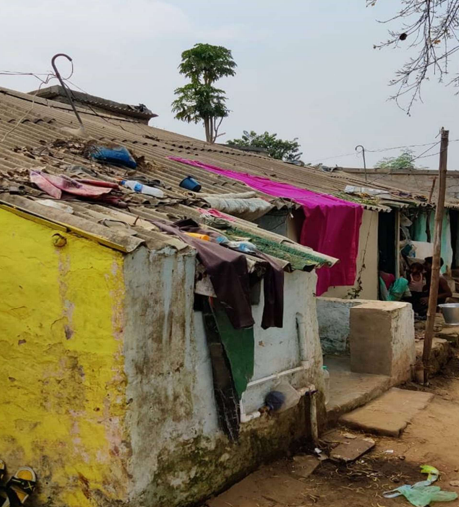
Citizenship In Urban India
To know more about our survey findings for specific project cities, please click on the relevant city.


Gallery
Contact
For more information or to discuss any aspects of the project, please contact: Tarun Arora, Project Manager, Research and Insights at Janaagraha:

Subscribe To Our Newsletter
Sign up for our newsletter to stay up to date with the latest in active citizenship and urban governance reforms in India’s cities and towns.