
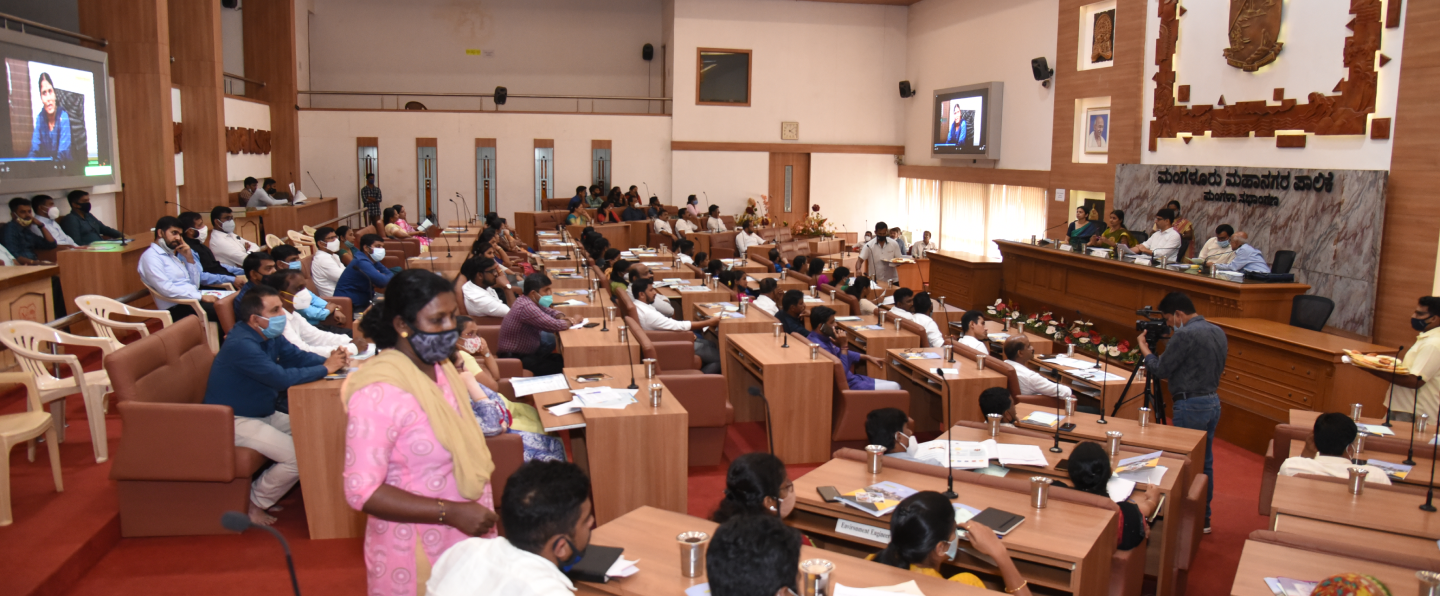
Overview
Clear, accurate, and undistorted electoral rolls – the proper listing of eligible voters are pre-requisites for conducting fair and just elections. The Election Commission of India (ECI) has acknowledged inaccurate electoral rolls hence the subsequent distortion of citizen demands.
Over the last two decades, Janaagraha has undertaken a series of research studies designed to quantify the quality of urban voter lists and examine the causes for such errors. We have undertaken research in 21 cities of India, including extensive household surveys, voter-list centric verification, interviews with booth level officers (BLOs) and elements of desk-based landscaping.
Approach
We launched several programmes to understand issues, revise and correct the electoral rolls, and design better processes for maintenance of the rolls. Namely and by chronological order, these programs and processes are:
Citizens’ Initiative for Voters’ ID List (CIVIL): 2005 – CIVIL aimed to correct the voter list for the Bruhat Bengaluru Mahanagara Palike (BBMP) by examining the accuracy of the polling sections within voting parts, the accuracy of house numbers, enumeration of voters, and to capture Elector’s Photo Identity Card (EPIC) numbers in the voter list.
State Enhanced Electoral Roll System (STEERS): 2006-2007: Studied the actual process of electoral roll maintenance as done by the government and enhanced the process of electoral roll maintenance through technology in partnership with the Research & Development (R&D) team at Microsoft. The idea of the project was for Microsoft to create an Electoral Roll Management System (ERMS), an automation software, and for Janaagraha to undertake outreach, i.e. to encourage people to use the new system
Jaago Re!: 2007-2009: An advert done by Tata Tea in 2007 tried to convey the issue of political apathy towards voting amongst the youth. Janaagraha believed that the strategy was to tell the youth to register to vote (i.e., addressing the issue of why they had not voted). So we proposed the idea of a voter registration drive with Tata Tea as the sponsor putting out a call of action to youth for voter registration. As a result, the national campaign encouraged the youth to register and vote. The Jaago Re! campaign addressed the fundamental challenges in voter registration by adapting the latest Internet and mobile technologies advances. We launched India’s first online voter registration, which allowed anybody to fill out their voter registration forms online in a few minutes. In addition, we offered an added feature of a GIS application that helped people locate their constituency and provided driving directions to submit the voter registration form after marking one’s house on the map. Additionally, a mobile phone application allowed youth to register for voting on the Janaagraha online platform through free-of-cost SMS messages.
Jaagte Raho!: 2011-2014: The programme undertook to keep the electoral roll list clean to understand the human infrastructure and process infrastructure of list maintenance. The developed model was for continuous updating, which included mobilising citizen volunteers called Area Voter Mitras (AVMs). Two or three Area Voter Mitras covered a polling part (area under a polling booth) comprising approximately 500 households. AVMs eased the administrative burden of Electoral Roll Officers/Ward offices where requests for voter list changes needed to be submitted. In addition, AVMs were the single points of contact for voter registration in the neighbourhood.
Proper Urban Electoral Rolls (PURE) manual: 2012: Advocates the need for technology improvements to voter list management by:
- Using GIS to map polling part boundaries.
- Creating automated workflows for online voter registration that permit scanned documents and photographs, and digital signatures, thus preventing the need for in-person submission of original documents
- Making voting mutually interchangeable within ACs instead of the current rigidity on voter lists at the polling part/booth level
- Adopting Open Data standards regarding voter lists. These standards ensure that the voter lists are maintained, updated, and disclosed in best-in-class data formats. Additionally, they are amenable to integration with other government databases (as against PDF formats) such as gas/other utility subscriptions, National Population Register etc.
- Using hand-held devices with online forms and integrated GIS to update voter lists backed by hard copy submissions and voter attestations.
Following a decade of work in the field, in 2012 Janaagraha also started trying to objectively measure the quality of voter lists at city-level across India. Objective measures of the state of the voter lists serve to highlight, using valid means, whether there is any block in citizens’ democratic rights. As well as the most obvious and commonly discussed concern of citizens being denied their right to vote, other issues can be explored this way. These include the potential for phantom voting (related potentially to margins of victory in elections) as well as considering the implications on voter turn-out statistics, consequently feeding into debates around voter-apathy in urban centres.
In the journey to measure the quality of voter lists Janaagraha has faced some difficulties. For example, efforts to measure the quality of the lists in Patna and Bengaluru had to be ceased on account of poor address infrastructure and difficulty in reaching out to Booth Level Officers (BLOs). This prompted instead, a focus in research on the processes that lead to the creation of voter lists, one of the most important being the ‘BLO layer’ of functioning. BLOs are the frontline workers of the Election Commission of India (ECI) tasked with collecting data on voters as well as verifying their claims and requests. These officers hold other full-time government jobs as well. Needless to say, any issues within this layer are bound to have an effect on the quality of voter lists. While their importance is evident in the nature of work they undertake and it has been a decade since BLOs came into being, there have not been many studies trying to assess their effectiveness, investigating how well they are working and identifying any leakages that might be affecting the quality of voter lists.
To that end, since 2015, the scope of Janaagraha’s research has expanded to look into the processes involved in voter list quality and management across cities in India including Bangalore, Chennai, Patna, Thiruvananthapuram and Delhi, with particular focus
(a) The role of the Booth Level Officer (BLO) and reviewing additional resources, primarily websites of Chief Electoral Officers (CEOs), which support the BLO layer to try and paint a better picture of the system of getting enrolled on the voter list, requesting amends to an existing enrolment, etc.
(b) Measuring errors on the voter list –
- Errors of inclusion i.e., names which should be included on the list but are not there, using citizen – centric surveys
- Errors of deletion: Names which are on the list but should not be i.e., using voter list centric surveys
Publications
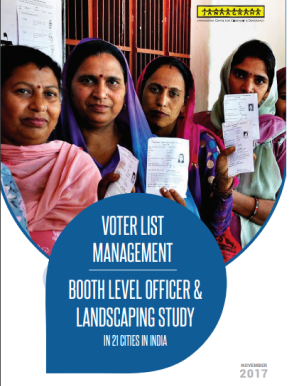
Booth Level Officer and Landscaping Study
Download
Summary Report – Findings from Booth Level Officer (BLO) Interviews in Patna
Download
Main Report – Findings from Booth Level Officer (BLO) Interviews in Patna
Download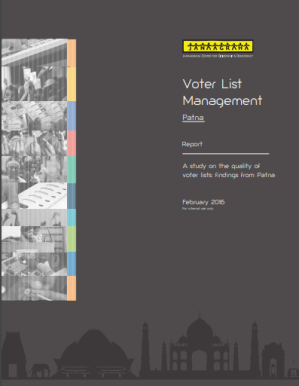
Main Report – Survey on the Quality of Voter Lists (QoL) in Patna
Download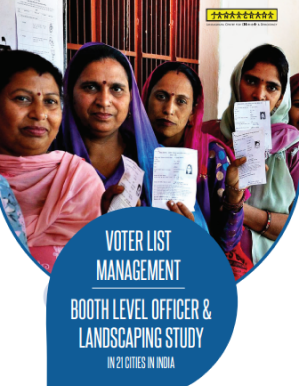
Voter List Management: Booth Level Officer and Landscaping Study in 21 cities in India
Download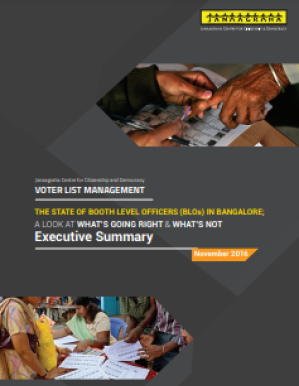
The State of Booth Level Officers (BLOs) in Bangalore (Summary Report)
Download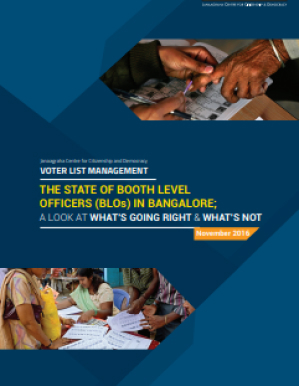
The State of Booth Level Officers (BLOs) in Bangalore: A look at what’s going right and what’s not
Download
Findings from Booth Level Officer (BLO) interviews in Patna (Summary Report)
Download
A Study on the Quality of Voter Lists – Findings from Booth Level Officer (BLO) interviews in Patna
Download
A Study on the Quality of Voter Lists – Findings from Patna
Download
A Study on the Quality of Voter Lists – Findings from Patna (Summary Report)
Download
Survey of the Quality of Voter Lists in Delhi
Download
Survey of the Quality of Voter Lists in Delhi (Summary Report)
DownloadSubscribe To Our Newsletter
Sign up for our newsletter to stay up to date with the latest in active citizenship and urban governance reforms in India’s cities and towns.